
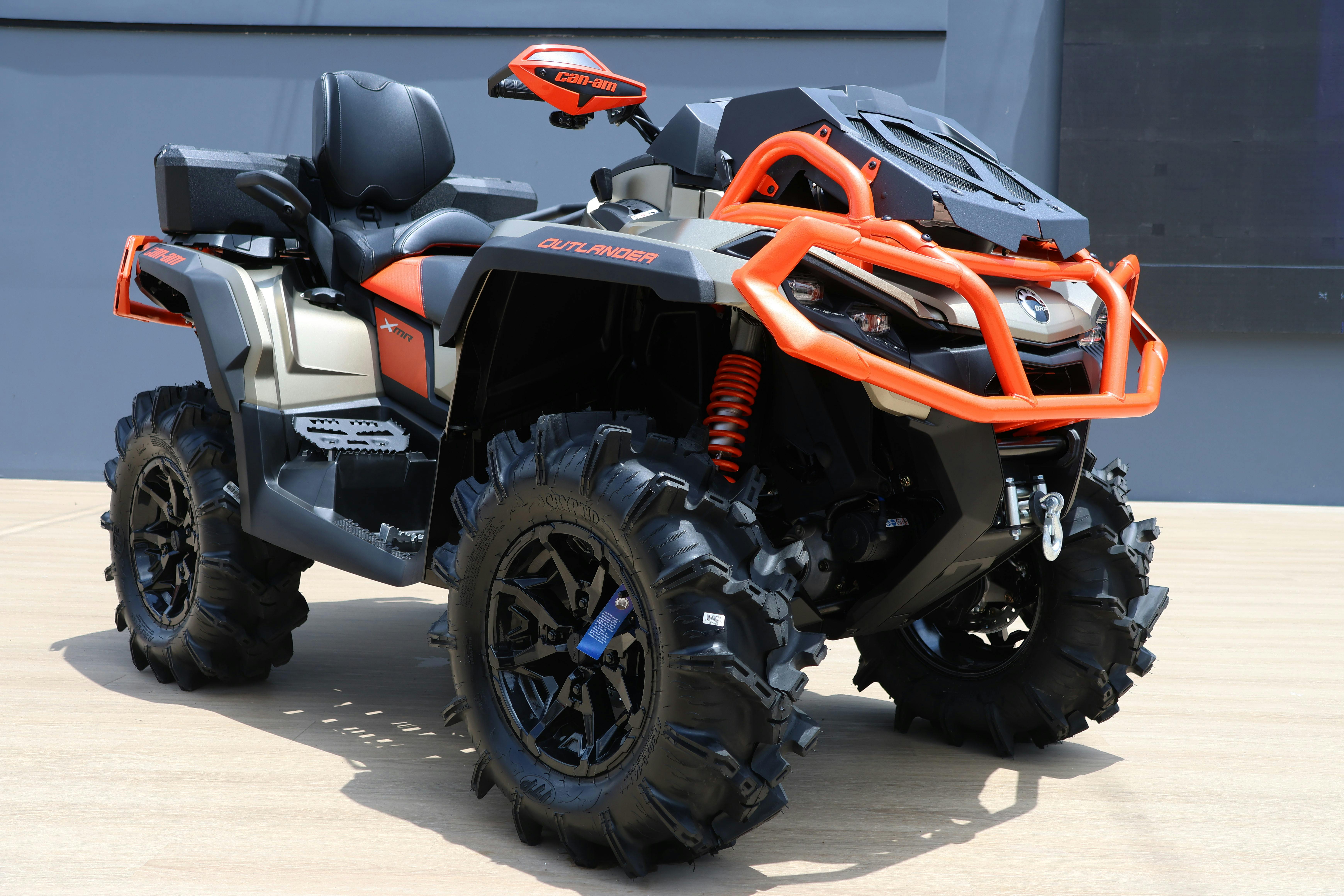
What Are ATV Tires?
All-terrain vehicle (ATV) tires are specifically designed for smaller, more agile machines that excel in off-road recreation and light-duty work. These tires are generally smaller in diameter and width compared to utility terrain vehicle (UTV) tires, with common diameters ranging from 22 to 26 inches. Widths are typically between 7 and 10 inches.
Their size makes them well-suited for single-rider vehicles that need to maneuver quickly through tight trails or rugged terrain. ATV tires are built for maneuverability and control, rather than heavy-duty hauling. That’s one of the biggest differences between ATV vs. UTV tires.
Since they are lightweight, you’ll be able to weave through wooded paths and climb rocky slopes easily. They are also great for accelerating quickly across open fields. Here are some common tread designs you’ll encounter when shopping for ATV tires:
- Knobby patterns for mud or loose dirt
- Paddle-style tires for dunes
- Flatter tread designs for hard-packed trails
The emphasis is on providing reliable traction, acceleration, and quick response rather than supporting a lot of weight. If you will be engaging in activities like trail riding, racing, hunting, or light chores around a farm, the ability of ATV tires will serve you well.
What Are UTV Tires?
UTV tires are built for larger and more powerful machines designed to carry multiple passengers and haul more weight. UTVs often serve as workhorses on farms, construction sites, or recreational areas, so their tires need to withstand higher loads, torque, and continuous stress.
Because of the added strain, UTV tires are larger, with typical diameters ranging from about 25 to 32 inches. They tend to be wider as well, ranging from about 9 to 12 inches.
These tires also have a heavier construction that includes reinforced sidewalls to reduce the risk of puncture damage. The added rigidity can provide stability when carrying gear or passengers.
ATV tires are focused on agility. On the other hand, UTV tires prioritize traction, durability, and load-bearing strength.
Another key factor is the ply rating. UTV tires typically have higher ply ratings, which means they provide more resilience against sharp rocks, ruts, and heavy use compared to thinner ATV tires.
In the past, tires were composed of multiple plies. While modern tires still have multiple layers, the ply rating no longer indicates the actual number of layers of material. Instead, it is a measure of strength.
Durability is the defining feature of UTV tires. They are rugged and designed to hold up against heavy daily use. Whether you are hauling equipment across the farm or transporting workers to a job site, they will get the job done.
Key Differences Between ATV & UTV Tires
Here’s how ATV vs. UTV tires stack up in some key areas:
- Ply Rating: ATV tires typically use a lower ply design to keep weight down, while UTV tires have a higher ply design for better puncture resistance
- Tread Depth and Design: ATV tread patterns are optimized for quick handling, offering aggressive lugs for mud or smoother patterns for speed
- Durability: UTV tires are built to withstand heavier applications, while ATV tires are lighter and wear faster under stress
The biggest difference between ATV and UTV tires is the size. ATV tires are smaller and narrower. The result is a lightweight design that allows you to be more nimble and agile while cruising around different terrains. UTV tires are larger and wider, which provides better traction and durability. The trade-off is that they are much heavier.
If you have a larger ATV, it may be able to accommodate UTV tires, while a small UTV may get by with ATV tires.
While there is nothing wrong with using a slightly different type of tire for your equipment, you need to make sure it aligns with your intended use case. A lightweight tire can help your UTV handle nimbly and accelerate faster. However, you don’t want to increase the odds of a blowout if it’s hauling a heavy load.
Similarly, installing heavy-duty UTV tires on your ATV can be a great option for increasing durability. But it could also weigh down your equipment and affect handling, which can be a big problem when hitting the trails.
Choosing the Right Tire for Your Vehicle
When shopping for ATV and UTV tires, you need to consider your vehicle specs, terrain, and workload. The best tires for ATV vs. UTV applications come down to several factors, including the following:
- The type of surface you’ll be driving on (hard vs. soft)
- The weight of your vehicle
- Lift and ride height
- Driving style
- Use case (i.e., general purpose, mudding, field work)
If you primarily use your ATV for trail riding, hunting, or recreation, lightweight tires with aggressive tread will give you the best performance. Riders who enjoy hitting mud holes should opt for mud tires with deep lugs. Those riding on dunes will benefit from paddle tires that dig into the sand.
If you own a UTV and are in the market for tires, the right fit will depend on what you use your machine for most. Is it used for work or play? Next, consider how durable your tires need to be to hold up.
Considering these factors will help you choose the ideal tires for your machinery and get the most out of your new investment.