
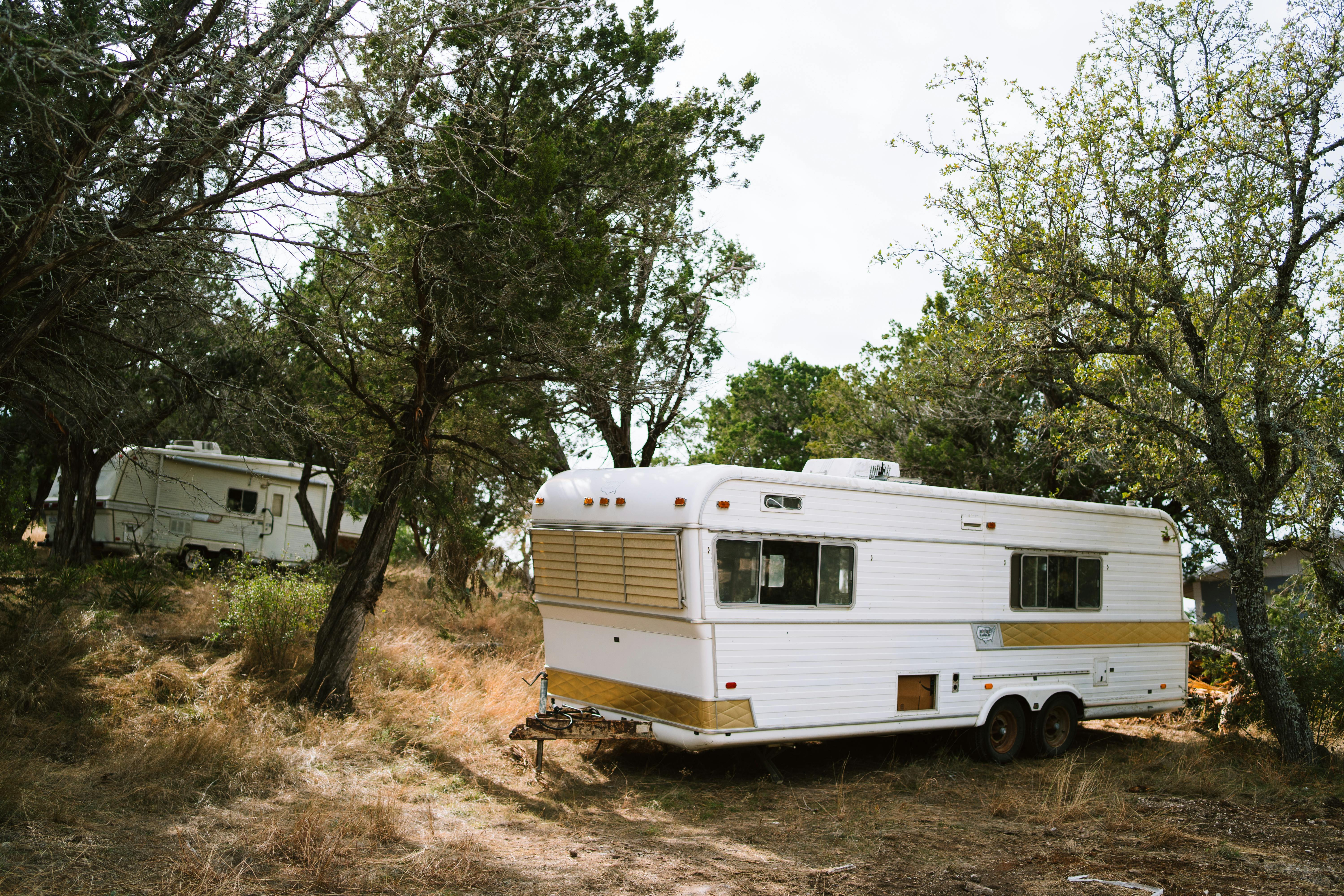
If you are in the market for tires for your trailer or equipment, you need to choose wisely. A lot is riding on which tires you buy. During your search, you need to focus on the ply rating and load range.
The trailer tire load range determines how much weight your tires can safely carry and how they handle pressure. Likewise, the ST tire load range helps ensure stability, longevity, and safety on the road.
If you’re towing a travel trailer, hauling equipment, or working in ag or construction, you need to match your tire’s capabilities to its workload. With that in mind, here’s everything you need to know about trailer and ST tire load ranges.
Trailer (ST) Tires
Load Range C-F and PSI
The ST tire load range is the first step to choosing the right fit. These designations range from C through F and reflect the tire’s ability to handle heavier weights and higher pressures. Here are some general ST tire load ranges:
- Load Range C tires carry up to 1,820 pounds at 50 PSI
- Load Range D tires support roughly 2,540 pounds at 65 PSI
- Load Range E increases the capacity to 3,520 pounds at 80 PSI
- Load Range F increases the capacity to 4,045 pounds at 75 PSI
Keep in mind that the PSI and capacity thresholds vary based on tire size, not just the load range. Always make sure to follow the limits marked on the sidewall of your tire.
Speed Ratings J-N (MPH Equivalents)
The ST tire load range isn’t the only factor you need to consider. Speed ratings play a huge role in tire longevity and safety. Most ST tires are engineered to support a lot of weight, not run at high speeds. To find out what your tire is rated for, you’ll need to look at the letter on the sidewall. Here are some common ratings:
- J: 62 MPH
- K: 68 MPH
- L: 75 MPH
- M: 81 MPH
- N: 87 MPH
Just because your tire is rated for a certain speed does not mean you should test its limits. If you are hauling a loaded trailer, try to keep your speed about 10-15MPH slower than the rating on your tires. Keep in mind, despite your tire’s speed rating, the highest recommended towing speed is typically 55 mph, though some experts suggest up to 60 or 65 mph in ideal conditions, depending on your setup.
GAWR/GVWR Math and Tongue Weight
Calculating the trailer tire load range isn’t as easy as reading a few sidewall markings. You also have to check your trailer’s gross axle weight rating (GAWR) and gross vehicle weight rating (GVWR). Divide the GAWR by the number of tires per axle to determine the minimum load capacity required per tire.
Ag & OTR
Bias vs. Radial
In agriculture and off-the-road applications, tire design determines performance. Bias-ply tires feature diagonal cord layers and rigid sidewalls. They are resistant to cuts. Radial tires use belts oriented at 90 degrees to the tread. They don’t generate as much heat during operation and provide better traction.
Radials are the more well-known option and dominate road-heavy work. However, bias tires still excel in muddy fields or rough terrains. Choosing the right construction complements the correct trailer tire load range or ag-specific rating for your intended workload.
Sidewall Strength and Ply/Cord Construction
Older tires used ply rating as a simple indicator of toughness. However, the ST tire load range or load index provides a more accurate strength rating. The sidewall’s durability comes from both its materials and design. Tires with nylon and polyester cords are flexible. Those with steel belts reduce the risk of punctures and reinforce the tread.
If you are performing OTR or heavy agricultural work, thicker sidewalls are essential. They preserve the structure of the tire when under extreme torque. Pairing the right sidewall composition with your trailer tire load range or ag tire rating ensures lasting performance in both soft soil and hard terrain.
Field vs. Road Trade-Offs
Achieving adequate traction in the field while optimizing road durability is a constant challenge. A soft compound that offers great traction and flotation may wear rapidly on paved roads. On the other hand, harder tread can cause rutting or compaction in the field.
The same logic applies to the ST tire load range. A higher load range means you can carry more, but it results in a stiffer ride.
Industrial/Forklift & Skid Steer
Sidewall Construction for Impact
In industrial settings, sidewalls constantly take a beating. Solid or foam-filled designs eliminate air pressure maintenance. However, pneumatic tires remain most common for outdoor or mixed-surface operations. A higher load range ensures pneumatic forklift and skid steer tires can withstand heavy loads.
These tires have thicker beads and layered cords. As a result, they are better at dissipating energy from repetitive impacts.
Puncture Resistance and Compounds
Tires used on forklifts, skid steers, and other industrial machines are made from special rubber compounds. These materials offer a good mix of toughness and flexibility. The harder the tire, the better it resists abrasion. The softer it is, the better grip it can offer on smooth surfaces, such as a concrete warehouse floor.
Choosing the right type of tire and load range for your equipment prevents sidewall fatigue and also reduces the risk of a blowout.
Duty Cycle and Surface Type
Consider the duty cycle of your industrial tire, which includes how long it operates and under what loads. Use this information to determine which compounds and tread types to choose. For example, indoor forklifts typically require non-marking, heat-resistant treads. Outdoor units benefit from deeper lugs and harder compounds.
Similarly, adjusting your ST tire load range to match travel distances and terrain ensures stability and tread life. A properly rated trailer tire load range can accommodate different surfaces and reduce maintenance frequency.
Lawn & Garden/UTV
Low PSI and Flotation
Lawn, garden, and UTV tires are typically inflated to much lower PSI ranges. As a result, they can preserve soil and grass.
However, the ST tire load range concept applies to them, too. Higher load ratings mean the tire can carry more weight without exceeding its design pressure. Using the correct trailer tire load range equivalent ensures the sidewalls remain stable, even at low PSIs.
Turf Protection Patterns
Tread pattern determines how a tire moves across the ground. Turf-saver or multi-trac designs distribute weight evenly. More aggressive options improve traction on slopes. UTVs tend to perform best with rounded shoulder treads that offer some bite.
Select a tread based on your intended use case. Make sure the tire load range supports your equipment and any loads you’ll be hauling. Remember to account for the weight of the operator.
Rim/Valve Considerations
Low-pressure tires often use tubeless valves designed for low-PSI applications. However, you must match the tire, rim, and valve to ensure the components function properly. If they’re mismatched, you’ll be dealing with leaks and deflation issues.
Getting this step right keeps your tires within safe PSI ranges while also preventing sidewall collapses.
Shop Specialty & Trailer Tires by Load Range
Understanding load range ensures your tires perform safely and efficiently. Matching your trailer tire load range to the demands of your equipment reduces wear and prevents costly downtime.
Use these trailer tire load range insights to make informed purchasing decisions while shopping for tires. Explore premium and specialty trailer tires at Tires4That.